
For growers, farm managers & crop insurers

The hail lasts four minutes. The argument lasts four months.

Crop hail damage verification at the field. A pole-mounted Tessera records impact count, impact energy and duration where it stands, timestamped to the second. In the US, Hailios Fusion AI, trained on years of those measurements, extends that reading across the rest of the field; outside the US, the Tessera on the property is the answer. Together, that is the ground truth a parametric crop hail trigger needs to pay in days, and a traditional loss adjustment needs to stop being an argument about whether it hailed.

FIELD-LEVEL · NOT GRID-LEVELMOUNT: POLEANY US ADDRESS · ANY TESSERA SITE IN 150+ COUNTRIES

The problem, plainly

Crop damage does not sit still and wait for the adjuster.

A hail loss on a building is fixed the moment the storm ends. A hail loss on a crop is not. The damage is biological and time-dependent: a canopy shredded at flowering is a different loss from the same stones three weeks later, and defoliation that looks survivable on Tuesday can be a total by the following week once the stem lesions open up and the pathogens get in.

Meanwhile the evidence changes shape while the claim sits in a queue. Surviving plants compensate and regrow. Bruised bolls and split stalks rot. Lodged grain gets picked at by weather that has nothing to do with the insured event. By the time someone walks the field, the field is no longer the field that was hit — and everyone in the file is reconstructing a moment nobody instrumented.

Growth stage at the time of impact is the single most consequential fact in a crop hail claim, and it is the fact nobody can prove after the fact. Unless the event carried a timestamp.

Why a gridded estimate cannot do this

One quarter-section destroyed. The next one untouched.

Hail falls in narrow swaths — sometimes a few hundred meters wide, cutting diagonally across property lines that were drawn on a square grid. A radar cell resolves to something far larger than a field and reports one value for the whole of it. That single value is wrong twice: too high for the quarter that was missed, too low for the quarter that was flattened.

DETAIL L · SWATHPLAN VIEW · SCALE NTSPOLE 01 · MEASUREDNO HAILPOLE 03 · MEASUREDNO HAILPOLE 02 · MEASUREDIMPACTS RECORDEDBETWEEN THE POLESGROUND-TRAINEDHAILIOS FUSION AIRADAR ESTIMATEONE SOFT VALUEFOR ALL OF ITSWATH EDGECOREQUARTER-SECTION LINES DASHED
RADAR GIVES THE WHOLE AREA ONE SOFT ESTIMATE. HAILIOS MAPS THE SWATH ITSELF: MEASURED AT THE POLES, GROUND-TRAINED BY HAILIOS FUSION AI BETWEEN THEM.

This is why the adjuster walks the field, and why the grower waits. Absent ground truth for the field (a Tessera on the property, and in the US, Hailios Fusion AI extending its reading), the only evidence of what actually fell is the crop itself — which is the thing in dispute, changing daily, across thousands of acres, at the exact moment of the season when everyone qualified to inspect it is already somewhere else.

Tessera HAIL · pole mount

A witness on the fence line, running on its own power.

The pole mount is the natural variant for open ground: a mast at the field edge, on the pivot point or beside the yard, with no wiring, no trenching and no engineer. It measures the event where the crop is, not thousands of feet above it, and it keeps counting whether or not anyone is home.

Everything below is what the panel recorded, published with a plain statement of what was measured and how confident we are in it. In the US, Hailios Fusion AI carries that record across the rest of the field.

Impact countEvery stone that strikes the panel, counted individually across the event — not averaged, not inferred from reflectivity.
Impact energyKinetic energy per impact, in joules. The measurement that separates a stone that bruises a leaf from one that snaps a stem.
DurationWhen the first stone landed and when the last one did, to the second. A four-minute event and a twenty-minute event damage a canopy differently.
ConcentrationImpacts per unit area over time — the difference between scattered stones and a barrage.
Stone sizeA measured floor where a sensor stands, never inflated, with the most likely size modeled beside it. Ground-trained by Hailios Fusion AI and labeled across the rest of the field, in the US.
Standing conditionsTemperature and relative humidity at the instrument, folded in as supporting data. The sensor knows the weather it stands in.

FIVE MEASUREMENTS · TIMESTAMPED TO THE SECOND · NO STONE SIZE OVERSTATED, EVER

In the field

The hardware, photographed

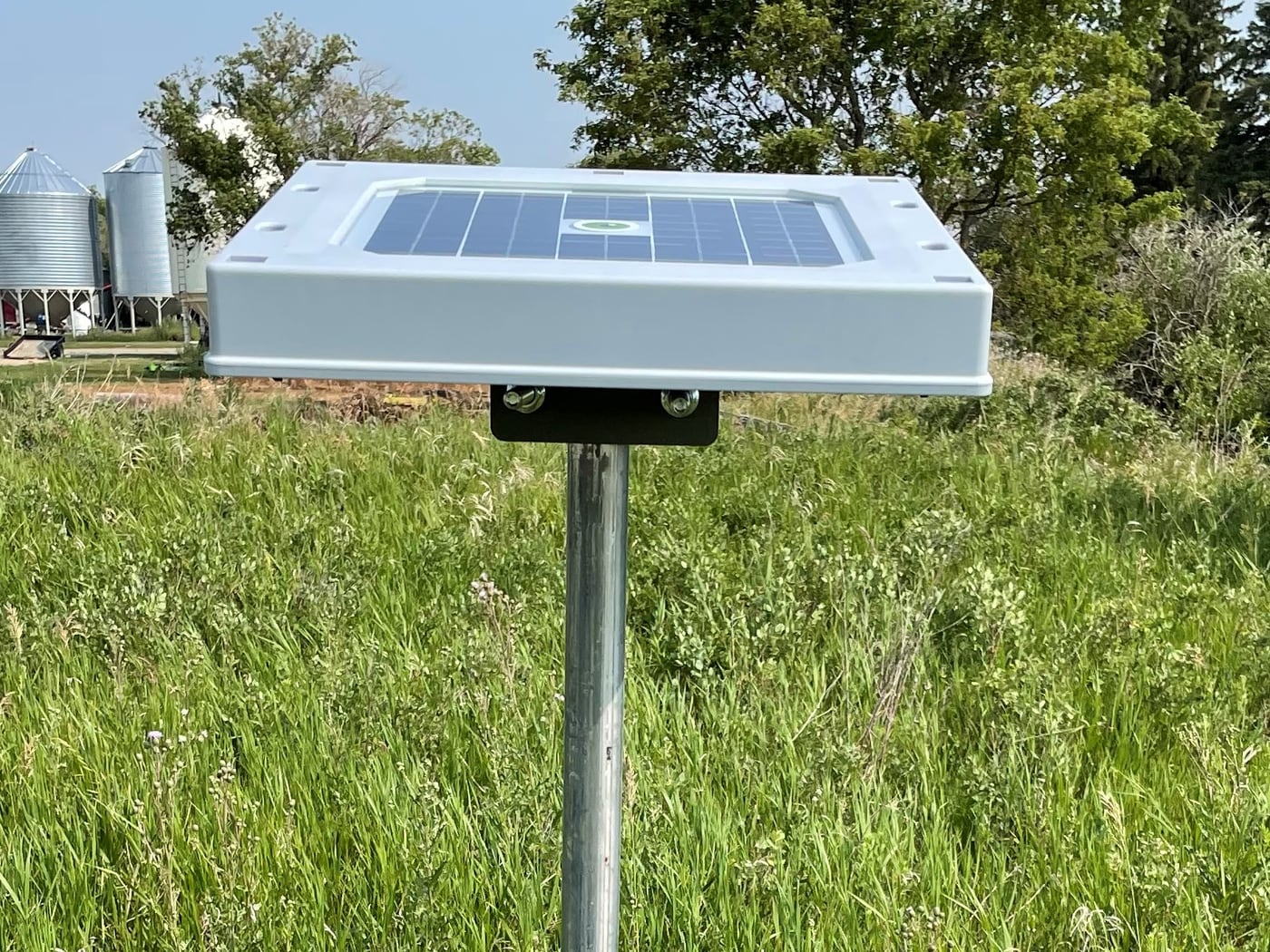
A pole-mounted Hailios Tessera sensor standing in a grassy field, grain bins and a farmyard behind it
Pole-mounted in the field it measuresONE MAST, ZERO WIRES.
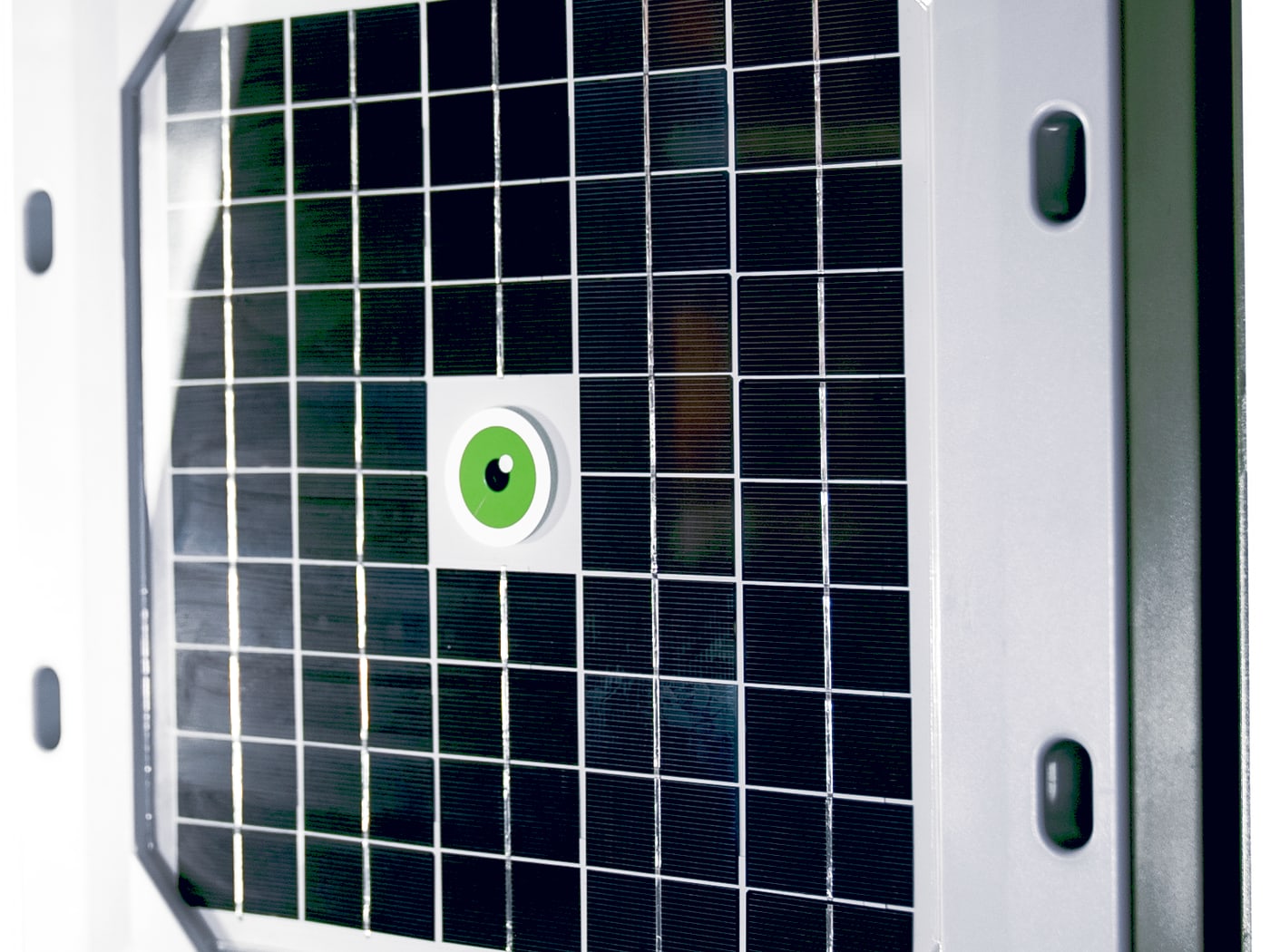
Angled close-up of a Tessera sensor: the solar panel that doubles as the impact collection surface, with the green Hailios eye at its center
The solar panel is the surface a stone actually hitsIT ONLY REPORTS WHAT LANDS ON IT. THAT IS THE WHOLE TRICK.
What measurement changes

Two claims, both of them shorter

Parametric

A trigger that reads the field, not a grid

An MGA or carrier writing parametric crop hail cover can define the trigger on the insured field itself: measured by a Tessera (impact energy above a threshold, impact count, event duration) and, in the US, extended across the field by Hailios Fusion AI, instead of on a gridded proxy that was never built for loss settlement. Basis risk stops being a structural feature of the product and becomes a question of where you put the poles.

The trigger evaluates against a record that already exists the moment the storm ends. That is a payment in days, made before the grower has had to decide whether to replant.

Traditional

An adjustment that starts from an agreed fact

On an indemnity claim the record does not replace the adjuster — it removes the first two weeks of the adjuster’s job. Date of loss, occurrence, severity at the property: settled on arrival, in a report that states what we measured, what was ground-trained, and how sure we are, on page one, in plain language.

What remains is the part that genuinely requires an agronomist standing in the crop: growth stage, yield impact, and whether the stand is worth keeping. That is the conversation worth having.

THE FILE STOPS ASKING “DID IT HAIL HERE?” AND STARTS ASKING “WHAT DID IT DO TO THE CROP?” · ONE OF THOSE QUESTIONS HAS A GROUND-TRUTH ANSWER.

The economics

The economics of parametric only work if the data is easy and inexpensive to use

Crop hail has always been a volume business written on thin margins across a lot of small risks. A measurement layer that needs a crane, a permit and a site survey never reaches a family farm. In the US, Hailios Fusion AI answers for the farm with or without a mast on it, and where a Tessera stands, it measures what lands and carries that record across the rest.

Parametric partners working with our data
  • AXA Climate
  • Covermetrics
  • Descartes Underwriting
  • Hailsure
  • Liberty Mutual Re
  • Mainstay Underwriting
  • MSI Guaranteed Weather
  • Munich Re
  • Swiss Re
  • XS Global
Mosaic · the platform

Three questions, from the book down to the block

  1. “How should this book of farms be priced?”

    Mosaic Risk · know the risk

    Hail hazard scored across the US: six years of measured hail set against 26+ years of reported record. Underwrite a crop hail portfolio, set a parametric threshold or site the next irrigated block against hail that fell, not just against who bothered to file a report.

  2. “What hit this field, and exactly when?”

    Mosaic Reports · know the event

    One property, one date, one report a loss adjuster can put in the file and a grower can hold up. Dated to the storm, and where a Tessera stands, to the second, which is what makes growth stage at impact an argument you can actually win.

  3. “Is there anything I can do before it arrives?”

    Mosaic Alerts · know what’s coming

    Less than a solar plant can: a tracker stows, and a standing crop can’t be moved indoors. What up to 30 minutes of warning is honestly worth: machinery and sprayers under cover, crews out of the field, spraying or harvest held rather than started into a storm, and adjusters lined up for the morning after.

POWERED BY HAILIOS FUSION AI · PATENT PENDING · MEASURED WHERE WE ARE, GROUND-TRAINED WHERE WE AREN’T — AND LABELED ACCORDINGLY.

Talk to us

Know what hit the field, and when.

Tell us what you grow or what you write — acres and locations, or the book you underwrite — and we’ll show you what ground truth does to the claim that follows it.

GROWERS · FARM MANAGERS · CROP INSURERS · A FRIENDLY REPLY FROM A REAL PERSON, IN SEASON AND OUT OF IT.

Talk to us
Know what hit the field, and when.