
Roof
PEEL-AND-STICK
Adhesive pads straight onto the membrane — no penetration, no fixings, no wiring. The instrument sits on the insured surface itself.
Tessera HAIL is our hail impact sensor. It counts every strike, measures the kinetic energy each one delivers, records how densely they landed and how long the event ran, and stamps the whole thing to the second. Radar infers hail from a beam sweeping thousands of feet overhead. We measure it where it lands.
PATENTEDMEASURED, NOT INFERREDSOLAR POWERED · NO WIRINGTIMESTAMP TO THE SECOND
These five measurements are the raw record. Everything downstream — a parametric trigger, a claim file, a hazard score — is built from them. They are measured at the property, by hardware standing in the storm, which is why they can be stated rather than estimated.
Impact energy matters most. A roof, a windshield or a solar module fails when enough kinetic energy arrives, not when a stone reaches a nominal diameter. Energy is what the panel feels, so energy is what we report first.
Concentration is the one nobody asks for. Two storms with an identical peak stone leave very different roofs behind. Fifty strikes per square meter and five are not the same event, and only an instrument on site can tell them apart.
Duration and timestamp settle the arguments. A record that says the event began at 22:38:14, peaked at 22:41:07 and ended at 22:49:02 takes the date of loss out of the negotiation. Temperature, relative humidity and tilt angle are recorded alongside it, so the event is read in the conditions it actually happened in rather than in conditions borrowed from a station down the road.
KNOWS THE WEATHER IT STANDS IN · REPORTS WHAT IT FELT, NOT WHAT A MODEL EXPECTED IT TO FEEL.
Every buyer asks for a diameter, so here is exactly what ours means. Tessera measures every stone that strikes it. The largest stone in a storm may have come down in the parking lot, on the far side of the building or in a field a kilometer away, and no instrument can measure a stone that missed it.
So the maximum diameter on every report is the largest stone the instrument actually caught, derived from the energy it delivered. It is never inflated. It is a floor: the storm was at least this severe.
And the floor sits close to the truth. Across our multi-sensor sites, neighboring sensors differ by 15% on average, so a single Tessera catches most of what a storm drops on its site. The event report builds on that: it models outward from the measured floor, using every data point around the site, and adds the most likely size beside the one that was caught, labeled as modeled. No sensor on site? Hailios Fusion AI, trained on Tessera measurements, answers for your address.
A remote estimate can land on either side of the truth without saying which. Ours starts from a measured number that reality can only exceed, then tells you what the storm most likely was. Energy and concentration, the things that break roofs, arrive in the same record. That is a diameter you can write into a policy and stand behind in a claim.
WHAT WE CAUGHT IS THE FLOOR. WHAT WE MODEL IS LABELED. NEITHER IS INFLATED.
In the lab. At the IBS Hail Lab in Linz, Austria and at Koontz Labs, ice launchers fire stones of known size and mass at the instrument, at known velocity, so the energy arriving at the surface is a controlled quantity rather than an argument. What Tessera reported was compared against what the launcher delivered, shot after shot. Laboratory ice is how a field instrument earns the right to publish a joule figure.
In the field. Across our multi-sensor sites, neighboring sensors differ by 15% on average: independent instruments, the same storm, close agreement.
Over time. Six years of measured record, on three continents, is what Hailios Fusion AI is trained on and what every ground-trained answer is scored against.
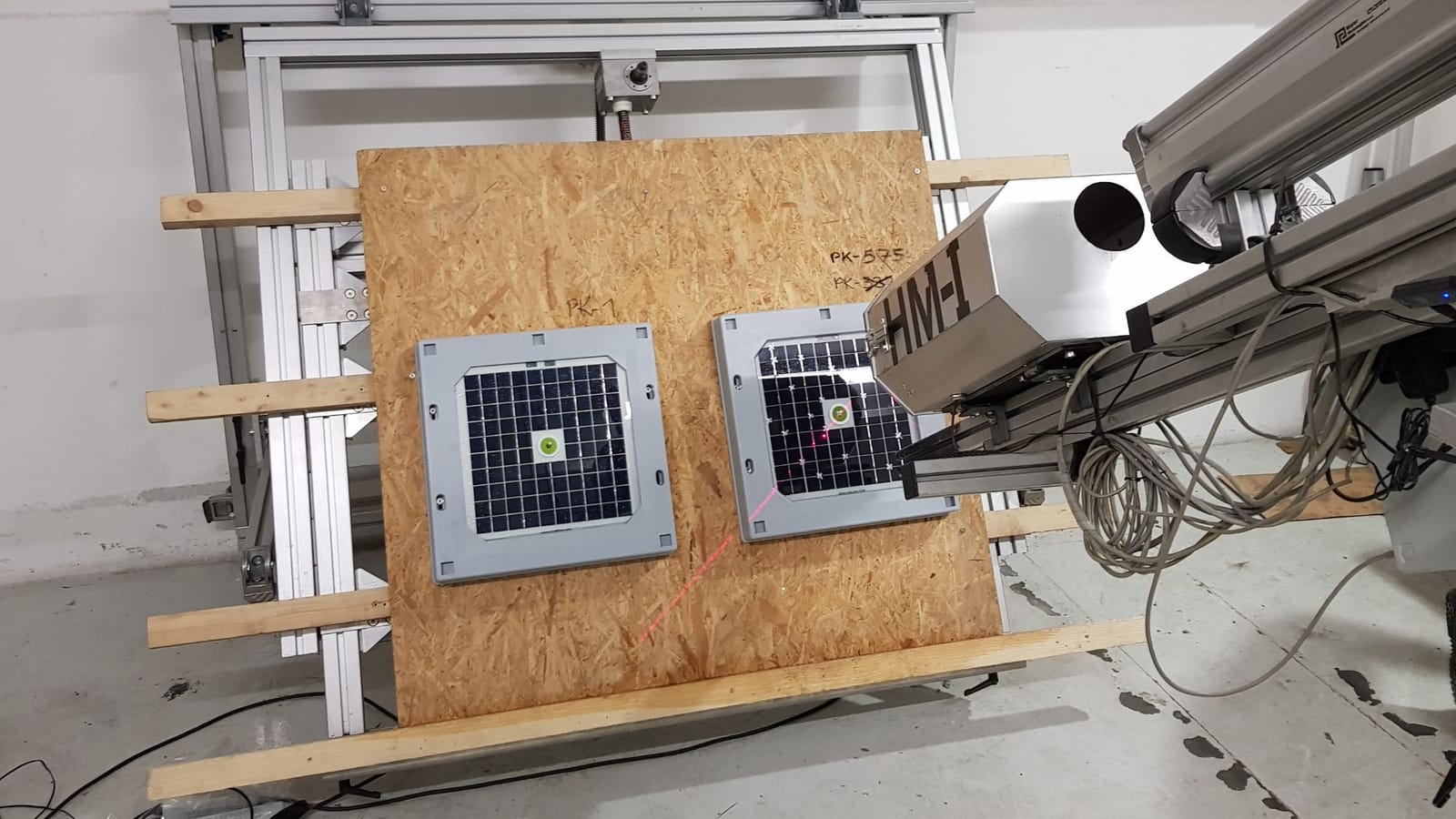
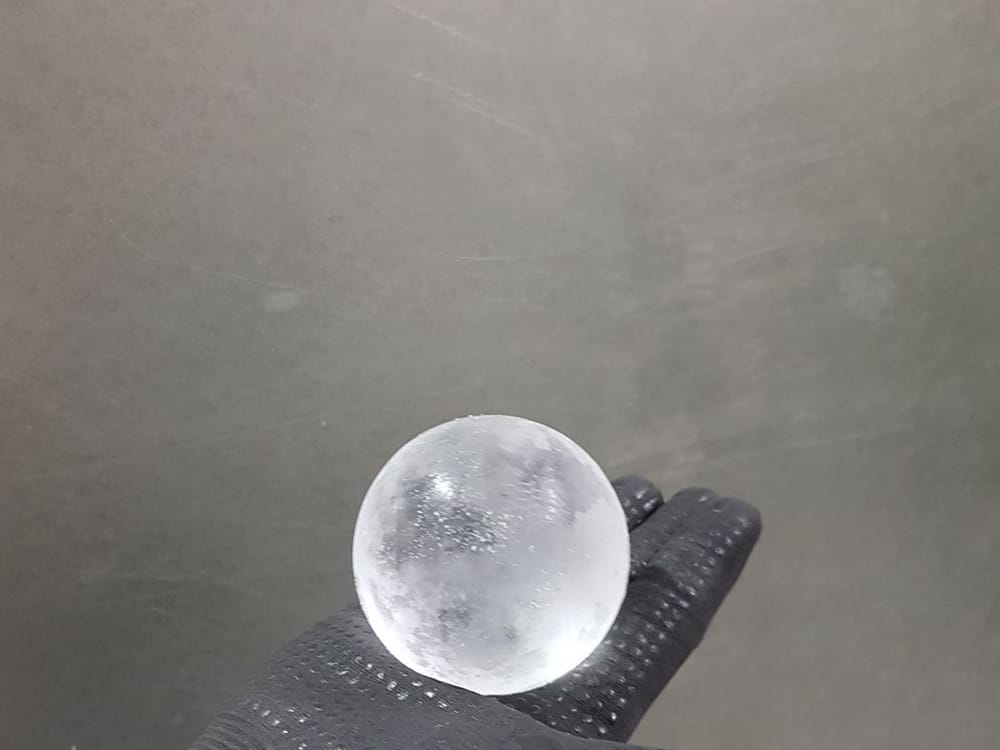
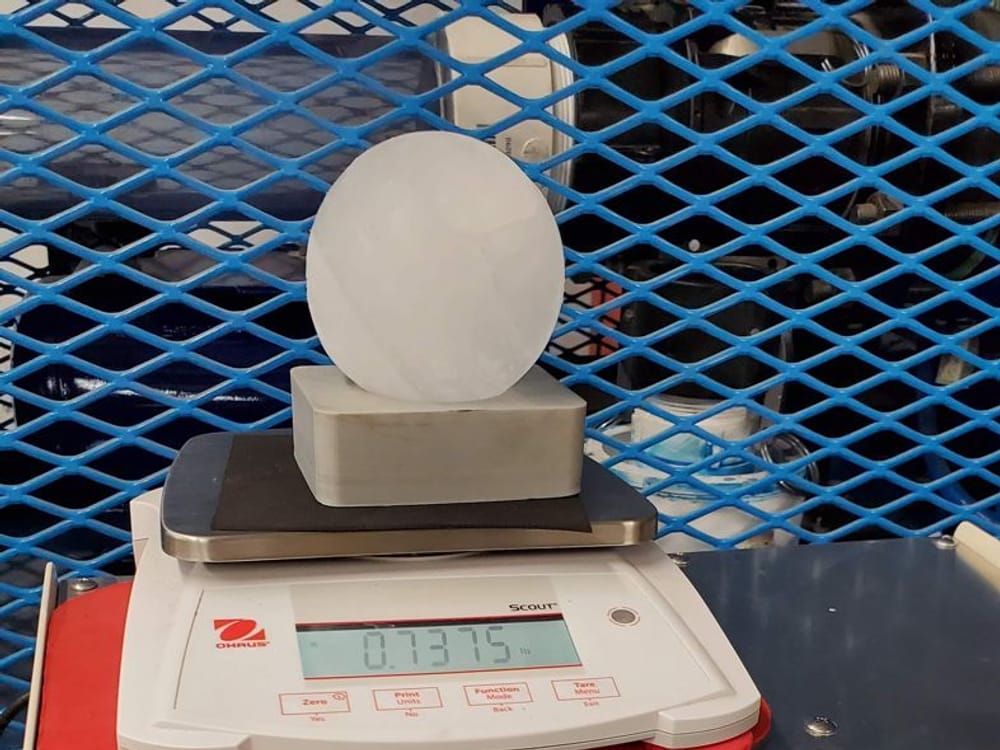
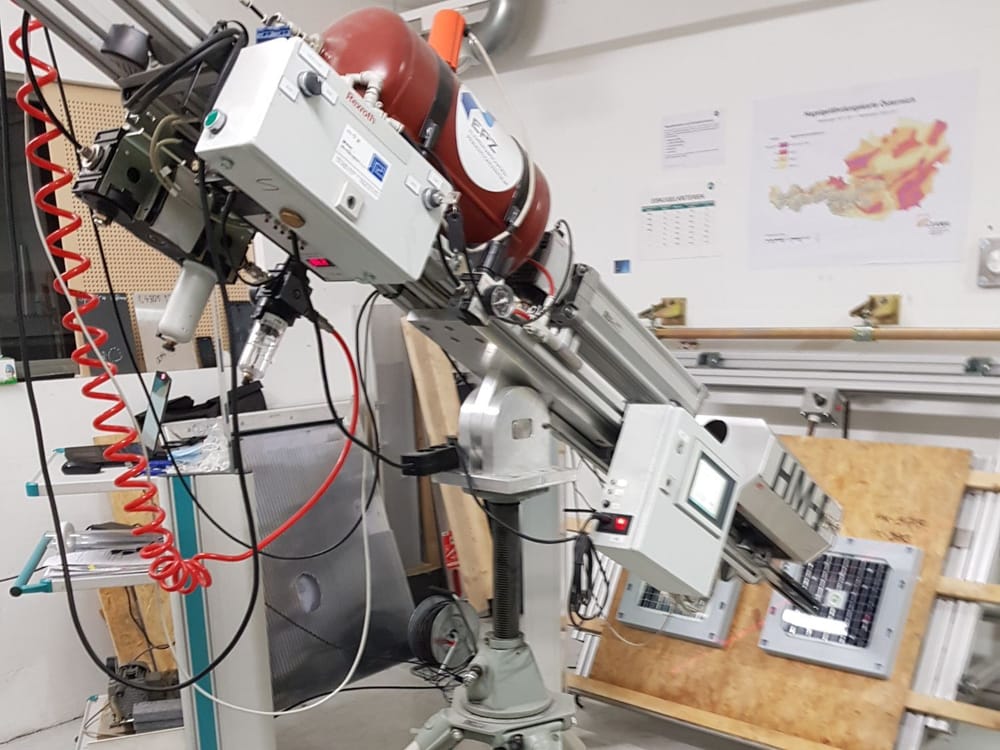
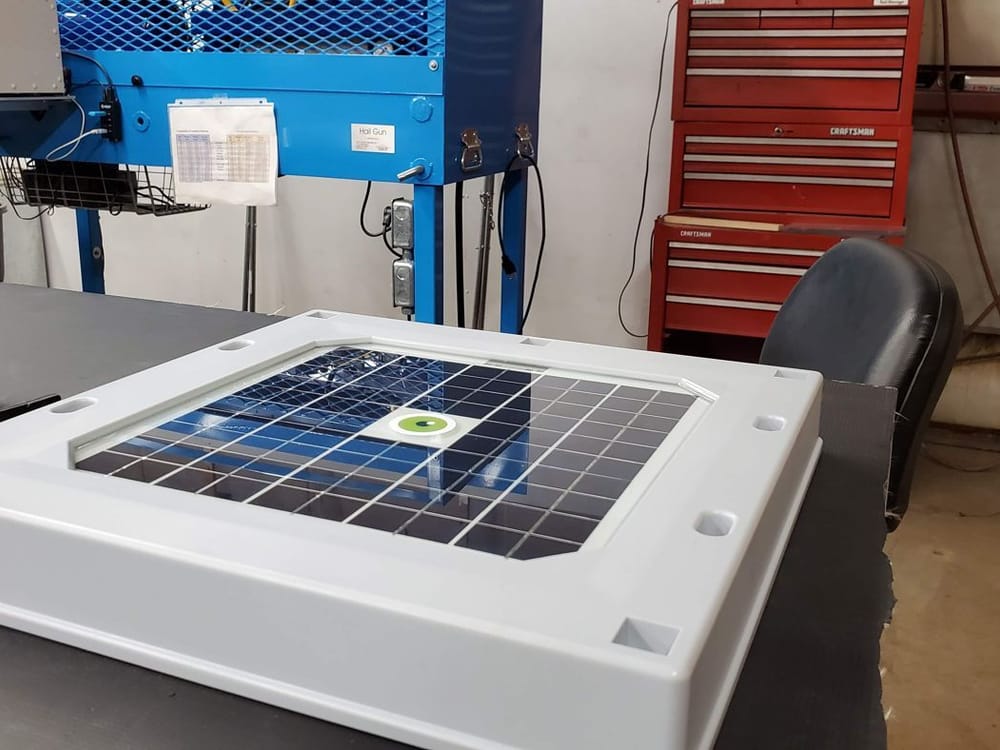
THE LAUNCHER KNOWS EXACTLY WHAT IT THREW. THAT’S THE ONLY WAY TO GRADE THE ANSWER.
| Primary measurements | Impact count, impact energy in joules per strike and aggregated across the event, impact concentration per square meter, and the duration of the event from first strike to last. |
|---|---|
| Time base | Every impact is timestamped to the second. Date of loss stops being a position and becomes a line in a record. |
| Stone diameter | Derived from measured impact energy and reported as a measured floor, never inflated. The event report adds the most likely size beside it, labeled as modeled. |
| Supporting conditions | Temperature, relative humidity and the instrument’s tilt angle are recorded alongside the impact record, so every event is read in the conditions it actually happened in rather than in conditions assumed from a nearby station. |
| Mounting | Roof, pole, or solar tracker. The roof mount is peel-and-stick: adhesive pads onto the membrane, no penetration, no wiring, no site engineer. |
| Sensing surface | The solar panel itself — our patented use of a solar panel as the impact collection surface. Ice strikes a known, instrumented surface, and the instrument measures the strike rather than inferring it from a distance. |
| Where the data goes | Into Mosaic, the platform, and out as three answers: Mosaic Risk for the hazard, Reports for the event, Alerts for what is coming. |
| Deployed | Operating today across North America, Europe and Australia, and deployable anywhere there’s a cellular signal. |
EVERY FIGURE THIS INSTRUMENT PUBLISHES IS ONE IT MEASURED. THE ONES IT DIDN’T, IT DOESN’T PUBLISH.
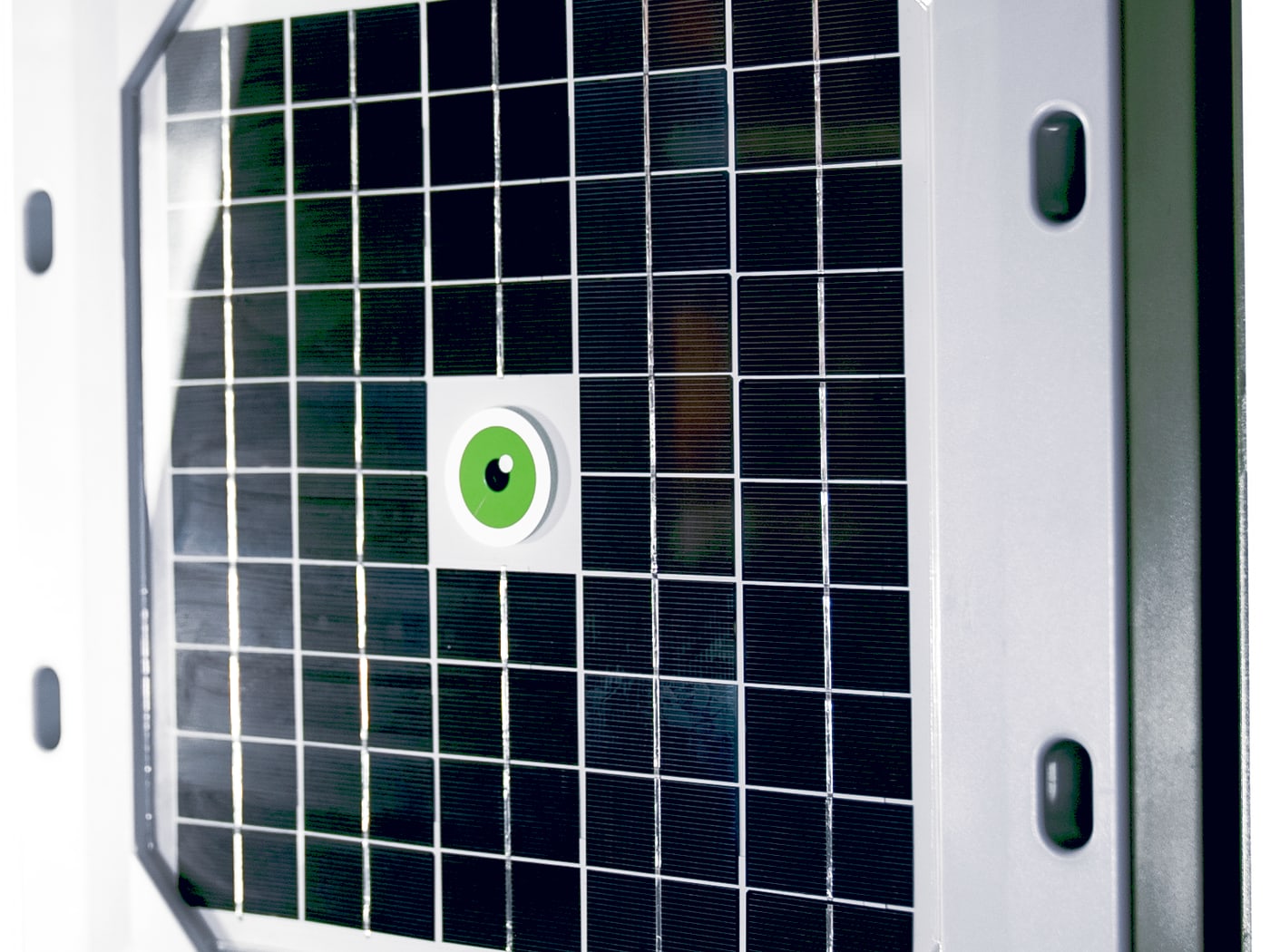
PEEL-AND-STICK
Adhesive pads straight onto the membrane — no penetration, no fixings, no wiring. The instrument sits on the insured surface itself.
OPEN GROUND
For exposure that is not under a roof at all: vehicle staging yards, equipment compounds, orchards and open fields. One tile, one pole, no trenching and no power run.
MOVES WITH THE ARRAY
Mounted on the tracker, so the instrument sees the same sky at the same angle as the modules it reports on. Stow decisions come off measurement taken in the plane of the array.
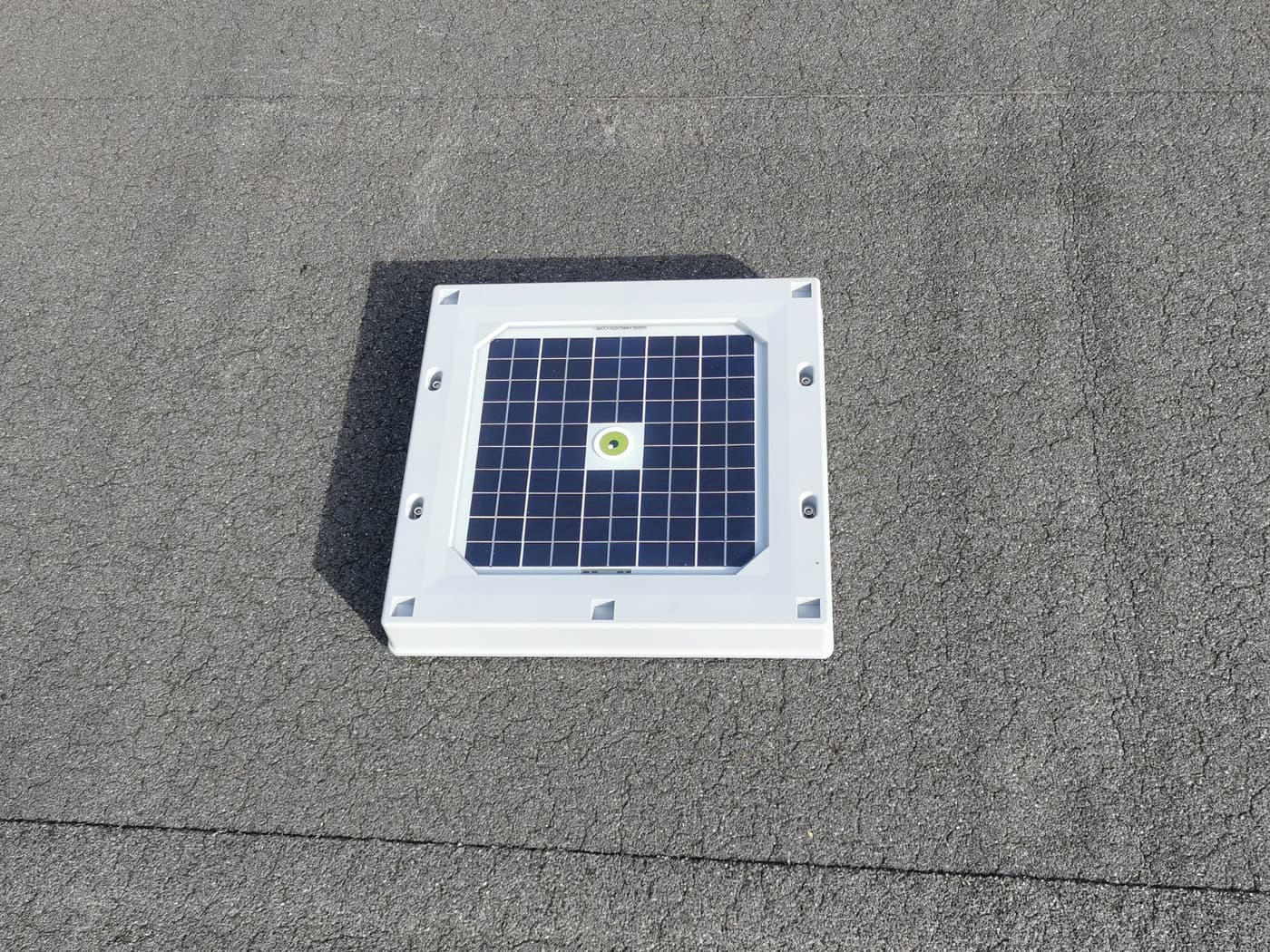
Installed once, and then simply present: recording the events that happen, and recording that nothing happened on the days nothing did. A season of quiet is data too — it is the part of the record that makes the loud day credible.
Not every asset needs its own instrument. The ones that do are the important, expensive ones, where a single storm can decide a large loss.
For the assets that need the absolute record. Every stone that strikes the instrument, counted and measured at the asset itself.
For everything else, or wherever price decides. Hailios Fusion AI, trained on Tessera measurements, gives each address a ground-trained answer without a sensor on site. It is less exact than an instrument on the asset, and we don’t pretend otherwise: its skill is scored against the ground, and every figure is labeled ground-trained.
One instrument settles one claim. Years of their measurements train Hailios Fusion AI, and together they become something no forecast archive can be: a record of hail that was measured, or ground-trained on what was measured, rather than inferred from radar. We operate today across North America, Europe and Australia, and the sensor is easy and inexpensive to deploy and needs no calibration, so it goes anywhere there’s a cellular signal.
MEASURED WHERE WE ARE, GROUND-TRAINED WHERE WE AREN’T — AND LABELED ACCORDINGLY.
HAIL is the Tessera instrument. See all of Tessera, including the WIND add-on, which brings validated partner instrumentation onto the same site record.
The measurement is the beginning, not the product. Every impact this instrument records goes into Mosaic and comes back out as risk, as evidence, or as a warning.
Mosaic Risk
Years of measured impacts, scored by geography. Underwriters, reinsurers and cat modelers price the territory against hail that actually fell, rather than against who happened to file a report about it.
Explore Risk →
Mosaic Reports
This address, this date, this degree. Adjusters, contractors and restoration teams get one report built from the impact record — count, energy, concentration, duration, and stone size as a measured floor with the most likely size beside it, in plain language.
Explore Reports →
Mosaic Alerts
Facilities, fleet, operations and solar O&M teams get up to 30 minutes of warning — enough to stow the array, get the crew off the roof, or move what's most exposed.
Explore Alerts →
POWERED BY HAILIOS FUSION AI · PATENT PENDING · ONE MEASUREMENT, THREE QUESTIONS, NO INFERENCE IN BETWEEN.
Tell us what you insure, operate or repair, and we’ll show you what a measured hail record changes about it.
WE’D LOVE TO HEAR FROM YOU. A REAL PERSON WILL REPLY, USUALLY THE SAME DAY.
Talk to us