
For carriers, reinsurers, MGAs & cat modelers

A trigger is only as good as the measurement under it

Hailios supplies parametric hail trigger data and hail damage verification for insurers: measured by an instrument standing on the risk, or ground-trained by Hailios Fusion AI where there isn’t one, and labeled which is which. Radar tells you where a storm probably was. We tell you what actually hit.

BASIS RISK · BOTH DIRECTIONSANY US ADDRESS · ANY TESSERA SITE IN 150+ COUNTRIES

The problem, plainly

The policy pays when the model says so. Not when the damage happened.

Radar-derived triggers are inference. The beam deciding whether a contract pays is sweeping thousands of feet above the roofline, at a range where its sample volume is larger than most of the risks inside it, and it is gridded far coarser than any single address. What comes out is a plausible reconstruction of a storm. What a parametric contract needs is a measurement of an event.

Basis risk is the consequence, and it is not a rounding error: it is the gap between the index and the loss, sitting in the middle of the product. Ground truth collapses that gap from both directions at once: fewer false triggers, fewer missed events. Scored against the ground, Hailios Fusion AI reports 77% fewer false positives than radar models. Measured where a Tessera stands on the risk, ground-trained where one doesn’t, and labeled which is which. The same record that stops the book paying for a non-event is the one that proves the insured’s roof was hit.

ABTHE WHOLE PIXELTHIS VIEWONE RADAR PIXEL · ONE ANSWER FOR EVERY ROOF IN ITDETAIL G · PLAN VIEW · NTSA · MEASURED · 22:41:07TESSERA ON THE ROOFB · GROUND-TRAINED · CERTAINTY STATEDNO SENSOR IN THIS STORMTHE PIXEL RUNS ON →A KILOMETER OR MORE, WIDER FARTHER FROM THE RADAR
One radar pixel, many risks. A trigger written on the pixel pays them all the same; a trigger written on the property pays the one that was hit.
What ground truth is worth

Basis risk runs two ways. So does the fix.

DIRECTION ONE · THE INDEX FIRES, NOTHING BROKE

False triggers

A gridded index clears its threshold over a cell that contains your risk, and the contract pays on a storm that left the roof intact. The money leaves the book for a non-event, the loss ratio wears it, and the next renewal is priced against a loss history that never physically happened.

The fix: An answer written on the property. A no-hail result at the risk is data, too, and the book doesn’t pay for a non-event.
DIRECTION TWO · THE ROOF BROKE, THE INDEX NEVER FIRED

Missed events

Hail does real damage at an address and the index, resolved across a cell far larger than that address, never reaches the trigger. The insured learns what basis risk means on the worst day of their year. The product loses the account, and parametric loses an advocate.

The fix: An answer resolved closer than a radar pixel alone, so the hit at this address is on the record, not averaged away.

FEWER FALSE TRIGGERS. FEWER MISSED EVENTS. THE SAME RECORD ANSWERS BOTH.

Under the wording

What a settlement-grade trigger is built on

We lead with impact energy and impact concentration, because those are what break a roof. Stone size is reported as a measured floor, never inflated, with the most likely size beside it: it is the number everyone asks for, and the one we are most careful with.

Impact energyKinetic energy delivered by each impact, and aggregated across the event. The measurement that correlates with damage, rather than a proxy for it.
Impact concentrationHow many impacts landed per square meter. Two storms with the same peak stone can leave very different roofs behind, and this is the difference.
Event windowStart, peak and end, timestamped to the second. Date of loss becomes a fact in the file instead of a position in a negotiation.
Stone sizeA measured floor, never inflated: the size we can stand behind, with the most likely size modeled beside it and labeled so.
SitingWhere a Tessera stands on the insured risk: roof, pole or solar tracker, peel-and-stick, no wiring, no site engineer. Where one doesn’t, the answer is ground-trained and labeled so.
CoverageAny address in the US, ground-trained by Hailios Fusion AI and measured where a Tessera stands. Outside the US, any site with a Tessera on it, in 150+ countries.

EVERY REPORT STATES WHAT WE MEASURED, WHAT WAS GROUND-TRAINED, AND HOW SURE WE ARE — ON PAGE ONE, IN PLAIN LANGUAGE.

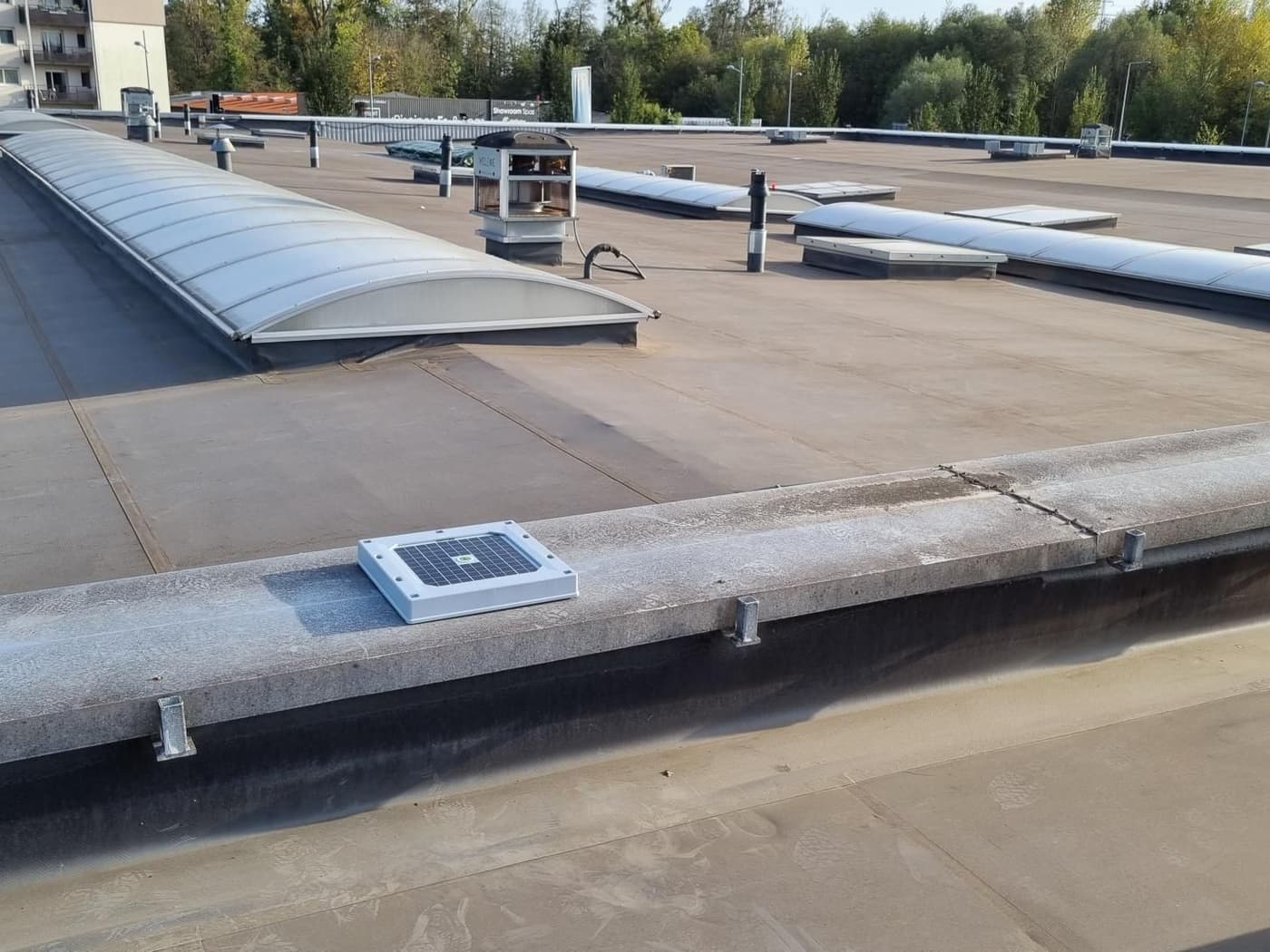
A Hailios Tessera sensor on the parapet of a large flat commercial roof, rows of barrel skylights and rooftop vents behind it
A measured risk, on a real roofTHE POLICY COVERS THIS ROOF. SO WE PUT THE INSTRUMENT ON IT.
MEASUREDGROUND-TRAINED

A TRIGGER WRITTEN AGAINST GROUND TRUTH AT THE INSURED SITE, NOT AGAINST A RADAR ESTIMATE OF IT.

Partners

The people who carry the risk already work with our data.

  • AXA Climate
  • Covermetrics
  • Descartes Underwriting
  • Hailsure
  • Liberty Mutual Re
  • Mainstay Underwriting
  • MSI Guaranteed Weather
  • Munich Re
  • Swiss Re
  • XS Global

WE SUPPLY THE DATA. THEY WRITE THE COVER.

For brokers & agents

A parametric trigger you can actually explain in the room

Parametric hail has always sold well on paper and badly across a desk, because the honest answer to “what if it hails on my roof and the index says no” was “then it doesn’t pay.” That single sentence has lost more placements than price ever has. Measurement changes the answer: the trigger is written on the client’s own property: measured by a Tessera there, or ground-trained at that address and labeled so. The thing the client experienced and the thing the contract responds to are the same event.

It also opens the accounts that were too small to bother with. Any US address already has a ground-trained answer, and where a sensor is worth it, it’s peel-and-stick with no wiring. That makes SME and retail hail cover practical to place, not just theoretically available.

01

Something to differentiate on at renewal

Every competing submission quotes the same indemnity wording off the same radar products. Yours arrives with ground truth at the client’s address and a report that says what landed there.

02

A claim conversation that isn’t about the index

When the storm comes, you are not defending a grid cell to an angry client. You are handing over hail damage verification for the address in question, with the date and time of loss already settled.

03

A reason the client hears from you first

Mosaic Alerts reach the insured before the hail does. Being the broker whose warning arrived in time to call the crew in is worth more at renewal than any brochure.

Placing hail parametric, or trying to? Tell us the book and we’ll show you what a ground-truth trigger does to the conversation.

BROKERS & AGENTS · ANY US ADDRESS · A TESSERA WHERE IT’S WORTH ONE: NO WIRING, NO ENGINEER

Talk to us about your book
Sample report

See what a hail event looks like in a file.

Tell us what you write, place or reinsure — hail parametric, indemnity property, or a book you’re still deciding how to price — and we’ll send a sample event report and walk you through the trigger data behind it.

CARRIERS · REINSURERS · MGAS · BROKERS · A REAL PERSON WILL REPLY

Talk to us
See what a hail event looks like in a file.